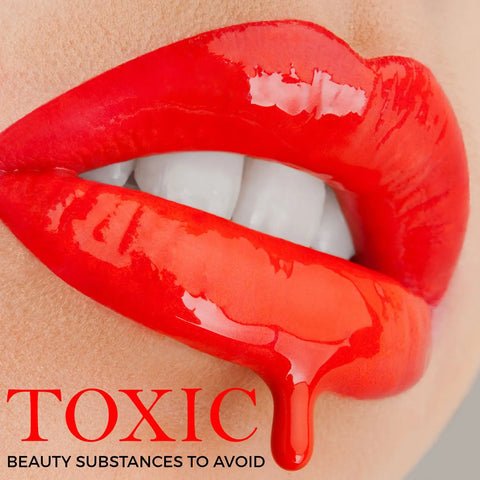
In our quest for clear, youthful, and glowing skin, we often trust that the products we buy are safe and effective. But what if your skincare routine is secretly sabotaging your skin? Many common ingredients, hidden behind scientific names and marketing jargon, can cause irritation, long-term damage, and even disrupt your hormones.
Becoming an informed consumer is your first line of defense. Here are the top 10 harmful ingredients you should watch out for on your product labels.
1. Parabens (Methylparaben, Propylparaben, Butylparaben, Ethylparaben)
What They Are: Synthetic preservatives used to prevent the growth of bacteria and mold in products.
Why They're Harmful: Parabens are known as endocrine disruptors, meaning they can mimic estrogen in the body. This interference with our hormonal system has been linked to an increased risk of breast cancer and reproductive issues. They are also known to cause skin irritation and allergic reactions in sensitive skin.
Look For Them In: Moisturizers, makeup, shampoos, and shower gels.
2. Sulfates (SLS & SLES)
What They Are: Surfactants responsible for the foaming and lathering action in cleansers and shampoos.
Why They're Harmful: Sulfates are harsh detergents that strip the skin of its natural oils, leading to dryness, irritation, and a compromised skin barrier. This can cause redness, trigger eczema, and make skin more susceptible to allergens and bacteria.
Look For Them In: Facial cleansers, body washes, shampoos, and bubble baths.
3. Phthalates (Often hidden under "Fragrance")
What They Are: Chemicals used to make plastics more flexible, but in cosmetics, they are used to make fragrances last longer and to soften other ingredients.
Why They're Harmful: Like parabens, phthalates are potent endocrine disruptors. They have been linked to developmental, reproductive, and neurological damage. Because they are often listed as a generic "fragrance," they can be very difficult to spot.
Look For Them In: Nail polishes, hair sprays, perfumes, and any product with "fragrance" or "parfum" on the label.
4. Formaldehyde & Formaldehyde-Releasers
What They Are: Preservatives that prevent bacterial growth. Formaldehyde-releasers (like DMDM Hydantoin, Imidazolidinyl Urea, Quaternium-15) slowly release formaldehyde over time.
Why They're Harmful: Formaldehyde is a known carcinogen (cancer-causing agent). It is also a strong allergen and irritant, causing contact dermatitis, scalp burns, and respiratory problems.
Look For Them In: Nail polish, hair-straightening treatments, body washes, and some eyeshadows.
5. Synthetic Fragrance & Parfum
What It Is: A blanket term for a secret cocktail of dozens to hundreds of synthetic chemicals used to scent a product.
Why It's Harmful: Because "fragrance" is considered a trade secret, companies aren't required to disclose the specific chemicals. This mix can include allergens, sensitizers, and endocrine disruptors. It is a leading cause of allergic reactions, migraines, and asthma.
Look For It In: Virtually every scented skincare, haircare, and cosmetic product.
6. Polyethylene Glycols (PEGs)
What They Are: Petroleum-based compounds used as thickeners, softeners, and penetration enhancers.
Why They're Harmful: The main concern with PEGs is that the manufacturing process can contaminate them with 1,4-dioxane, a probable human carcinogen. As penetration enhancers, they can also allow other harmful ingredients to be absorbed more deeply into your skin.
Look For Them In: Creams, sunscreens, and foundations.
7. Oxybenzone & Octinoxate (Chemical Sunscreen Agents)
What They Are: Common active ingredients in chemical sunscreens that absorb UV radiation.
Why They're Harmful: These chemicals are easily absorbed into the bloodstream and are known endocrine disruptors. They have been linked to hormone disruption, organ toxicity, and allergic skin reactions. They are also highly damaging to coral reefs, leading to bans in several regions.
Look For Them In: Chemical sunscreens and moisturizers with SPF.
8. Alcohol (Denatured Alcohol, SD Alcohol, Isopropyl Alcohol)
What It Is: A volatile solvent used to help products dry quickly and to penetrate the skin.
Why It's Harmful: High concentrations of drying alcohols strip the skin's natural barrier, leading to increased oil production (as the skin tries to compensate), irritation, and inflammation. They impair the skin's ability to heal and can worsen conditions like acne and rosacea.
Look For It In: Toners, astringents, acne treatments, and gel-based products.
9. Mineral Oil & Petroleum Jelly
What It Is: A by-product of petroleum refining used as a cheap moisturizing agent.
Why It's Harmful: Mineral oil creates a plastic-like barrier on the skin that clogs pores and can lead to breakouts. While it locks in moisture, it also traps in dirt, sweat, and dead skin cells. Furthermore, it can prevent the skin from breathing and releasing toxins.
Look For It In: Baby oil, cheap moisturizers, lip balms, and petroleum jelly.
10. Synthetic Colors (FD&C, D&C)
What They Are: Artificial colors derived from petroleum or coal tar sources.
Why They're Harmful: These colors are purely cosmetic and serve no benefit to your skin's health. They are known skin irritants and sensitizers and have been linked to ADHD in children. Some are even considered potential carcinogens.
Look For Them In: Soaps, shampoos, and any brightly colored cosmetic product.
How to Protect Yourself: A Simple 3-Step Action Plan
Become a Label Detective: Before you buy, turn the bottle around. Scan the ingredient list (INCI names) for the culprits mentioned above.
Simplify Your Routine: More products mean more potential irritants. Stick to a simple routine of a gentle cleanser, moisturizer, and sunscreen.
Choose Clean Beauty Brands: Support brands that are transparent about their ingredients and are certified "clean" by organizations like EWG or Credo.
Final Thought: Your skin is your largest organ. What you put on it is absorbed into your body. By making informed choices and reading labels, you can take control of your skincare and invest in products that truly nurture your skin's health.

Leave a Comment
Share your thoughts about this post